8 data tables
~12 pages
3 feature tiers
Overview
Élégance Event Venue is a luxury event-venue marketing and booking-inquiry website built for a New York venue hosting weddings, galas, and private celebrations. Developed with Next.js 16, React 19, Tailwind 4, PostgreSQL, node-postgres, and Zod, the site lets visitors browse spaces and packages with capacity, pricing, and gallery details, then submit booking and contact inquiries validated with Zod and persisted to PostgreSQL. The platform includes a tier-gated availability calendar and analytics roadmap aligned to its 3 feature tiers, along with rich SEO through EventVenue, FAQ, and Breadcrumb JSON-LD. Across ~12 pages and 8 data tables, the build organizes venue discovery and inquiry handling into a polished, structured experience.
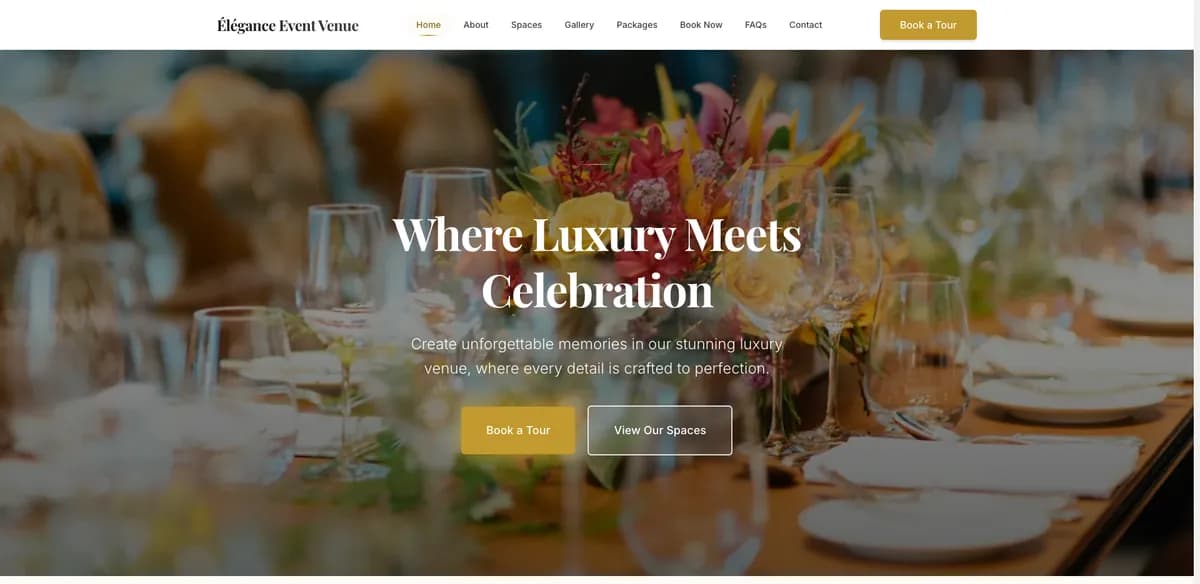
Key Capabilities
What we designed, built and shipped
Space & package browsing with capacity, pricing & gallery
Zod-validated booking & contact inquiries → PostgreSQL
Tier-gated availability calendar & analytics roadmap
Rich SEO: EventVenue / FAQ / Breadcrumb JSON-LD
Technology Stack
Cutting-edge technologies powering the solution
Next.js 16
React 19
PostgreSQL
node-postgres
Zod
Tailwind 4
Ready to Start Your Project?
Let's discuss how we can help you achieve similar results for your business
More Success Stories
Explore our other marketing sites projects
Marketing Sites
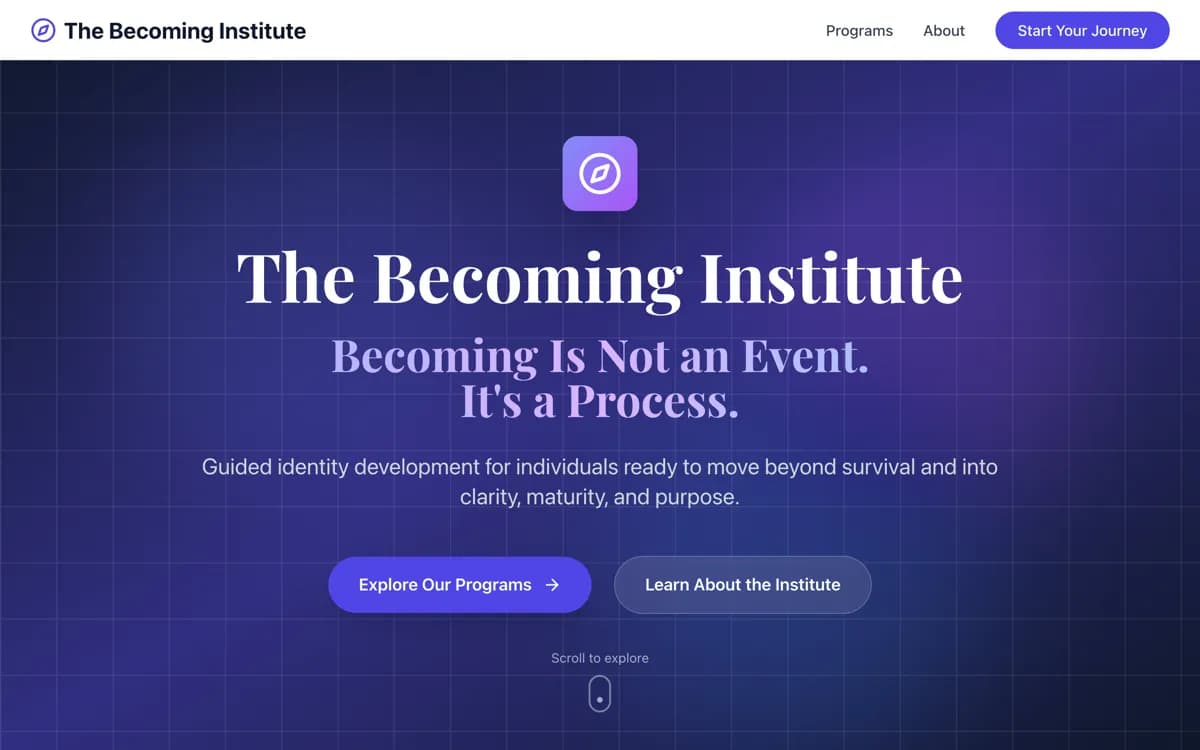
The Becoming Institute
For The Becoming Institute, eSparks IT Solutions delivered a marketing and lead-generation website focused on presenting structured programs and capturing prospect inquiries. Built with Next.js 16 and React 19 on the Next.js App Router, the site uses Tailwind for styling and Framer Motion for scroll-triggered program showcase animations. A lead-capture form includes validation, Turnstile bot protection, and server-side email delivery through Nodemailer via Brevo SMTP, supported by rate limiting. The implementation also includes security headers and multi-environment CI/CD, with a self-hosted deploy. Quality was reinforced through Jest + Testing Library and approximately 95% test coverage, supporting a reliable contact flow and polished program presentation.
Read Full Case Study
DevOps & Infrastructure
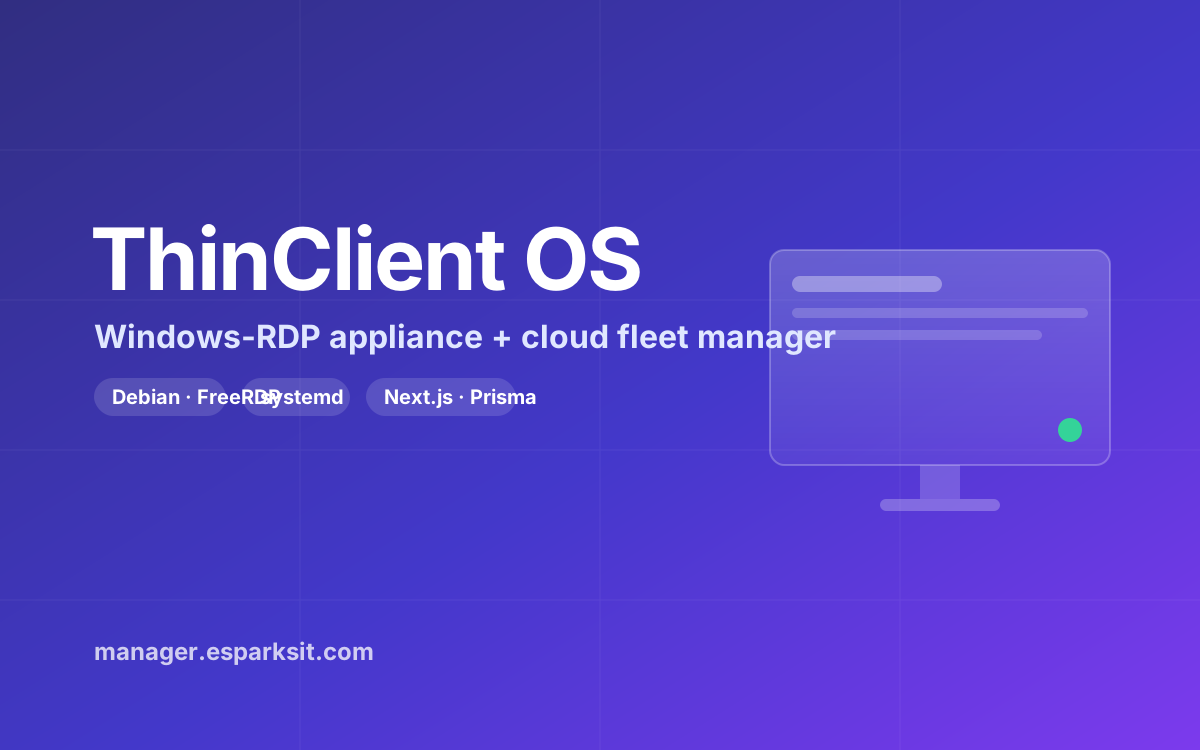
ThinClient OS + Fleet Manager
A production-grade Linux appliance that boots straight into a full-screen Windows RDP session — no desktop, no shell, no login prompt — backed by a self-healing watchdog and an infinite reconnect loop. On machines with Secure Boot and a TPM 2.0 chip the whole disk is encrypted (LUKS2, AES-256) with the key sealed in the machine's own TPM, and the encrypted install has been attack-tested against disk theft and boot tampering. Lost or stolen machines are wiped remotely, crypto-erasing the disk on encrypted installs. Optional per-account policy adds lock-screen password rules with a three-strike lockout, Windows-server certificate pinning, USB-storage and clipboard blocking, and memory hardening. New machines can be required to wait for administrator approval (on by default for new accounts), operating-system security patches can roll out through canary machines, and signed kernel updates roll back on their own if they fail to start. It ships as a reproducible ISO with a graphical installer and pairs with a Next.js fleet manager that provisions, monitors, secures and remotely controls the machines and the AWS, Azure and VPS Windows servers they connect to.
Read Full Case Study
Data Platform
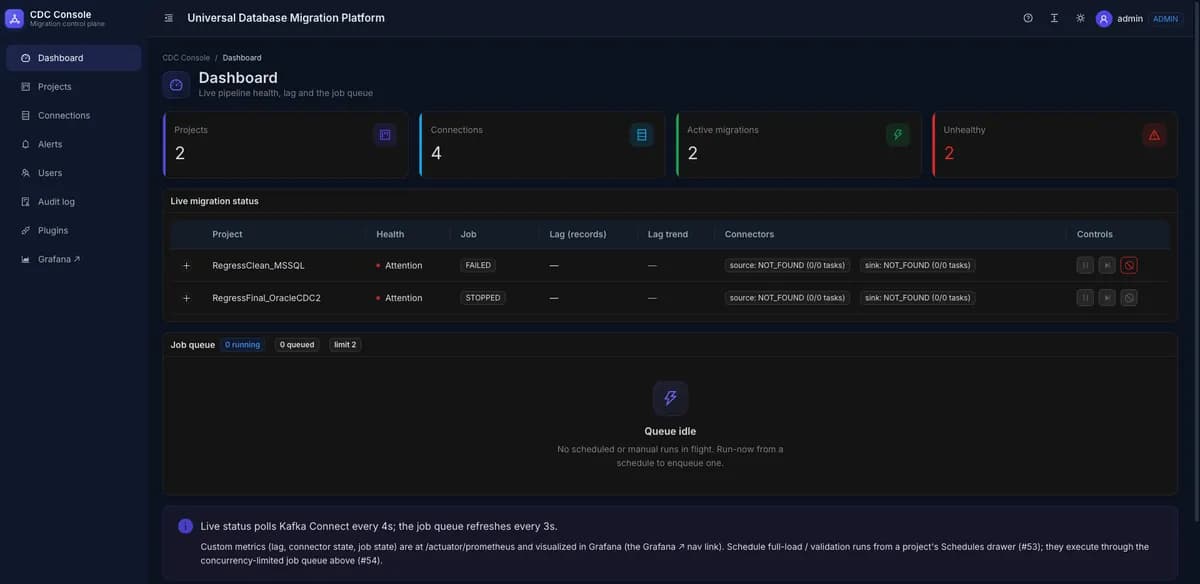
Database Migration Platform
eSparks IT Solutions built a browser-operated data platform for planning, running, monitoring, and validating real-time migrations between heterogeneous databases. Five relational engines (SQL Server, PostgreSQL, MySQL, Oracle, Db2) migrate in either direction; MongoDB is supported as a CDC source. Its Java 21 and Spring Boot 3 control plane orchestrates jobs, while a React interface supports operation through the browser. For real-time CDC, the data plane uses Debezium, Kafka, and a JDBC sink, with PostgreSQL in the stack and deployment via Docker Compose or Kubernetes (Strimzi). The platform includes end-to-end integrity validation with drift detection, custom Java SMTs, AES-GCM secret encryption, Prometheus/Grafana, and JWT/RBAC security. SQL Server, PostgreSQL, MySQL and MongoDB migrations are live-verified end-to-end — including a production programme that moved roughly 960 million rows across 405 tables from SQL Server to PostgreSQL with zero rows missing at validation; Oracle and Db2 connectors are implemented and tested at the unit/config level, pending live verification.
Read Full Case Study