
Programming
Choosing software engineering companies in Saudi Arabia
A practical guide to choosing software engineering companies in Saudi Arabia, with evaluation criteria, delivery models, costs, timelines, and risks.

Anika Rukhsar
Founder
Jul 20, 2026
10 min read
Businesses evaluating software engineering companies in Saudi Arabia should look for partners that can deliver secure, maintainable software while working within local business expectations, regulatory requirements, and multilingual user needs. The right choice is usually not the company with the longest service list; it is the team that can translate business goals into architecture, delivery plans, and measurable operational outcomes.
Key takeaways
- The best software engineering companies in Saudi Arabia combine strong delivery discipline with local compliance awareness, not just a broad list of technologies.
- A reliable vendor evaluation process should test architecture thinking, security practices, DevOps maturity, communication quality, and post-launch support before pricing becomes the main factor.
- For most business software projects, unclear scope and weak product ownership create more risk than the programming language or framework chosen.
- Typical delivery estimates vary widely by complexity, but decision-makers should expect discovery, architecture, security, integrations, and change management to affect both budget and timeline.
- A strong software partner should explain trade-offs in plain business language and show how technical decisions support scalability, resilience, and long-term maintainability.
Why the Saudi market changes how you evaluate a software partner
Saudi Arabia is a fast-moving market for digital platforms, enterprise modernization, mobile-first customer experiences, and cloud adoption. That creates opportunity, but it also changes the bar for vendor selection. A software partner in this region often needs to handle Arabic and English interfaces, local hosting or data residency considerations, integration with legacy enterprise systems, and delivery expectations shaped by both private-sector competition and large-scale transformation programs.
For business leaders, this means evaluation should go beyond “Can they build an app?” Ask whether the team can support enterprise workflows, identity and access management, auditability, APIs, cloud operations, and security controls from day one. In practice, many projects fail not because developers cannot code, but because architecture, product decisions, and operational readiness were not addressed early enough.
A capable partner should be comfortable across modern stacks and delivery models. That may include React, Next.js, Angular, Node.js, .NET, Java, Python, Flutter, Kotlin, Swift, PostgreSQL, SQL Server, MongoDB, Redis, Docker, Kubernetes, Terraform, GitHub Actions, Azure DevOps, AWS, Microsoft Azure, and Google Cloud. The point is not to chase every tool; it is to use an appropriate stack that fits your business constraints, compliance posture, integration requirements, and hiring reality after launch.
What to expect from software engineering companies in Saudi Arabia
The strongest firms usually offer more than implementation capacity. They bring structured discovery, system design, delivery governance, quality assurance, DevOps, cloud operations, and ongoing support. If your shortlist only talks about screens, features, and developer rates, you may be evaluating a staffing vendor rather than an engineering partner.
At minimum, a serious software company should be able to explain its approach in these areas:
- Discovery and product definition: workshops, stakeholder interviews, user journeys, backlog shaping, and release planning
- Architecture: monolith versus microservices, API-first design, event-driven patterns, integration strategy, and scalability assumptions
- Engineering quality: coding standards, code review, automated testing, branching strategy, CI/CD, and observability
- Security: secure SDLC, role-based access control, secrets management, encryption, logging, and vulnerability remediation
- Delivery management: sprint rituals, risk logs, scope control, change requests, and executive reporting
- Support: incident response, service levels, cloud monitoring, patching, and roadmap support
You should also expect honest trade-off discussions. For example, a startup validating a new B2B product may not need a complex microservices architecture; a modular monolith with a clean API layer may be faster and easier to maintain. On the other hand, a large enterprise platform serving multiple departments, channels, or geographies may need stronger service boundaries, centralized identity, message queues, and infrastructure automation from the start.
A practical decision framework for selecting the right partner
Start with business clarity before you compare vendors. Define the problem, not just the features. Are you replacing spreadsheets with a workflow system, modernizing a customer portal, launching a mobile commerce app, automating field operations, or building a data platform? Each of these needs a different delivery shape. If you skip this step, every proposal will look polished but difficult to compare.
A simple decision framework that works well in boardroom discussions is:
- Define outcomes: revenue enablement, process efficiency, compliance, service quality, platform consolidation, or faster time to market.
- Classify the project: greenfield product, modernization, integration-heavy enterprise system, mobile platform, AI-enabled workflow, or cloud migration.
- Set non-negotiables: security, language support, hosting model, ERP or CRM integration, budget guardrails, and delivery deadline.
- Score vendors across weighted criteria: domain fit, technical depth, architecture quality, communication, governance, and support maturity.
- Validate with working sessions: architecture review, backlog breakdown, risk assessment, and sample sprint plan.
When comparing proposals, look for specificity. A good proposal should identify assumptions, dependencies, major technical risks, and an initial release plan. It should also distinguish between must-have and optional capabilities. If every vendor promises speed, quality, flexibility, and low cost without discussing constraints, that is a warning sign.
In our experience at eSparks, the best selection process includes a live technical workshop with your shortlisted vendors. Ask them to respond to a realistic scenario: for example, “Build a multilingual supplier portal that integrates with SAP, supports role-based approvals, and logs every approval action for audit.” Their questions and architecture choices will tell you more than a polished sales deck.
Technical due diligence: what business leaders should actually ask
Non-technical decision-makers do not need to become architects, but they do need the right questions. Start with system design. Ask how the vendor would structure authentication, user roles, APIs, file storage, notifications, audit logs, and external integrations. Strong teams will discuss patterns like OAuth 2.0 or OpenID Connect, API gateways, webhook handling, asynchronous jobs, retry policies, and observability through tools such as Prometheus, Grafana, Datadog, or Azure Monitor.
Security deserves its own conversation. A mature partner should describe secure coding practices, dependency scanning, secrets management, least-privilege access, backup and recovery, environment separation, and release approvals. They should be comfortable discussing standards and practices such as OWASP Top 10, SAST and DAST scanning, MFA, encryption in transit and at rest, WAF configuration, and incident response workflows. If your business handles regulated data, ask how they approach data classification, retention, and audit trails.
Quality and delivery operations matter just as much as coding ability. Ask questions like:
- What is your test strategy for unit, integration, end-to-end, and regression testing?
- How do you manage infrastructure across development, staging, and production?
- What does your CI/CD pipeline look like, and who approves production releases?
- How do you monitor errors, latency, uptime, and failed jobs after go-live?
- How do you prevent knowledge from sitting with one senior developer?
Also ask who will actually do the work. Some firms present senior experts during presales, then hand execution to a junior team with limited oversight. Request role clarity: solution architect, engineering lead, QA lead, DevOps engineer, project manager, product owner, and support contact. This is especially important for complex programs involving cloud migration, AI features, data engineering, or cybersecurity hardening.
Delivery models, timelines, and typical cost ranges
Software budgets vary too widely for one universal number, but decision-makers can still use typical ranges to set expectations. A focused MVP for a workflow portal or customer-facing web application may take roughly 3 to 5 months if requirements are reasonably clear and integrations are limited. A multi-role enterprise platform with mobile apps, ERP integration, reporting, and approval workflows often lands in the 6 to 12 month range. Modernization programs involving legacy replacement, data migration, and phased rollouts can run longer because operational continuity matters as much as development speed.
Cost follows the same logic. A smaller product discovery may be measured in weeks; a moderate custom application may be budgeted in the tens of thousands of dollars; a larger enterprise system or multi-phase transformation can move into the low or mid six figures and beyond depending on complexity, integrations, security needs, and support coverage. These are not fixed market prices, only common planning ranges. Anyone quoting a very precise total before discovery is usually hiding assumptions that will appear later as change requests.
The delivery model affects value as much as the headline budget. Common options include:
- Fixed scope: useful when requirements are stable and acceptance criteria are clear
- Time and materials: better for evolving products, modernization, and uncertain scope
- Dedicated team: suitable for long-term product roadmaps and continuous iteration
- Hybrid: a paid discovery followed by phased implementation with controlled change management
For many organizations, a hybrid model is the safest choice. It allows architecture and roadmap decisions to mature before major build costs begin. It also reduces the common problem of signing a fixed-price contract on an unclear backlog, then spending months renegotiating scope.
Common pitfalls when hiring a software company
The most expensive mistake is choosing on price alone. Lower bids often omit discovery depth, testing effort, security hardening, DevOps setup, documentation, or support transition. The proposal may look efficient until production issues expose everything that was left out. A better approach is to compare total delivery readiness, not just implementation cost.
Another common pitfall is treating integrations as a minor detail. In reality, integration complexity often drives timeline risk. Connecting to SAP, Oracle, Microsoft Dynamics, payment gateways, SSO providers, government systems, warehouse tools, or custom on-premise software can require data mapping, rate-limit handling, retry logic, reconciliation workflows, and exception handling. If a vendor cannot explain how they de-risk integrations early, assume the plan is incomplete.
Leaders should also watch for these red flags:
- No clear product owner on the client side
- Vague acceptance criteria and shifting priorities every sprint
- Little attention to Arabic localization, timezone handling, or regional user experience
- Manual deployments with no rollback process
- No plan for support, maintenance, or knowledge transfer after launch
- Architecture chosen for trend value rather than business fit
A final risk is underestimating internal change management. Even excellent software can fail if approval workflows, user training, reporting expectations, and operating procedures are not updated. For enterprise projects, include business owners, operations, security, and support teams early. Software delivery is rarely just a technology project.
How strong partners handle cloud, AI, data, and security together
Today, many business applications are not isolated products; they are part of a broader digital operating model. A supplier portal may need analytics, AI-assisted document extraction, identity federation, secure file handling, and event-based notifications. A field service platform may need offline mobile sync, telemetry ingestion, geolocation, and near-real-time dashboards. This is why vendor evaluation should include adjacent capabilities, not only front-end and back-end development.
For cloud and DevOps, look for competence in landing zones, IAM, network segmentation, containerization, infrastructure as code, backup strategy, and disaster recovery. Teams should know when to use managed services such as Azure App Service, AWS ECS, RDS, S3, EventBridge, or Azure Functions, and when Kubernetes is justified. Overengineering infrastructure is common; so is underengineering resilience. A good partner explains both risks clearly.
For AI and data work, ask practical questions instead of broad ones. If you want document processing, will they use OCR plus validation workflows? If you want enterprise search, how will permissions be enforced? If you want forecasting or recommendations, what data quality and model monitoring are required? In many business settings, the real value comes from combining data pipelines, human review steps, vector search, prompt controls, and auditability rather than adding a chatbot for its own sake.
Security should connect across all of it. Cloud architecture, CI/CD, application code, logs, API keys, and user permissions all interact. Mature teams design these controls together. That is often the difference between a solution that merely launches and one that can survive real production scale, compliance reviews, and executive scrutiny.
Final checklist for decision-makers before signing
Before selecting a vendor, run a final review that forces clarity. You should be able to explain to your board or leadership team what will be built first, why that release matters, what the main risks are, and how success will be judged operationally. If the vendor cannot help you articulate this in simple language, they are not ready to lead the engagement.
Use this closing checklist:
- Scope: Is the first release clearly defined with assumptions and exclusions?
- Architecture: Is the proposed stack appropriate for scale, supportability, and hiring?
- Security: Are controls, responsibilities, and testing expectations documented?
- Delivery: Are cadence, reporting, roles, and escalation paths explicit?
- Integration: Have external system dependencies been identified and prioritized?
- Support: Is there a post-launch ownership model for incidents, patches, and enhancements?
- Commercials: Does the contract handle change requests, IP ownership, and acceptance criteria fairly?
The best software partner is rarely the one promising everything fastest. It is the one that reduces uncertainty, makes trade-offs visible, and builds systems your team can operate confidently after launch. For organizations comparing providers across Saudi Arabia and international markets, that combination of engineering depth, regional awareness, and delivery discipline is what usually separates a smooth program from an expensive rewrite.
Frequently Asked Questions
How do I compare software engineering companies in Saudi Arabia fairly?
Use a weighted scorecard that compares business understanding, architecture quality, security practices, delivery governance, integration capability, and support maturity before comparing price. A live workshop based on your real use case is usually more revealing than a generic proposal or portfolio.
What technologies should a modern software partner be comfortable with?
A strong partner should be able to work across common business stacks such as React or Angular for web, .NET, Java, Node.js, or Python for back-end services, PostgreSQL or SQL Server for data, and AWS, Azure, or Google Cloud for infrastructure. The right choice depends on your integration landscape, security requirements, internal support model, and long-term roadmap.
How long does a custom software project typically take?
A smaller MVP with limited integrations may take around 3 to 5 months, while a larger enterprise platform with multiple roles, integrations, and compliance requirements often takes 6 to 12 months or more. Timelines depend heavily on discovery quality, decision speed, legacy complexity, and how much change management is required.
Should I choose a fixed-price contract or a dedicated team model?
Fixed-price contracts work best when scope, acceptance criteria, and dependencies are stable and well defined. Dedicated team or time-and-materials models are usually better for evolving products, modernization work, and projects where architecture or integration risks need to be explored during delivery.
Work with eSparks IT Solutions
Planning a project around this? We work with businesses in the United States, Canada and the UAE, as well as the UK and Australia. Explore our Programming services and portfolio, estimate your project cost, or book a free call.
Related development services

Anika Rukhsar
Founder
Passionate technology writer and industry expert with years of experience in software development, cloud computing, and digital transformation. Dedicated to sharing insights and helping developers stay ahead of the curve.
Related Topics
Continue Reading
More insights in Programming
Programming
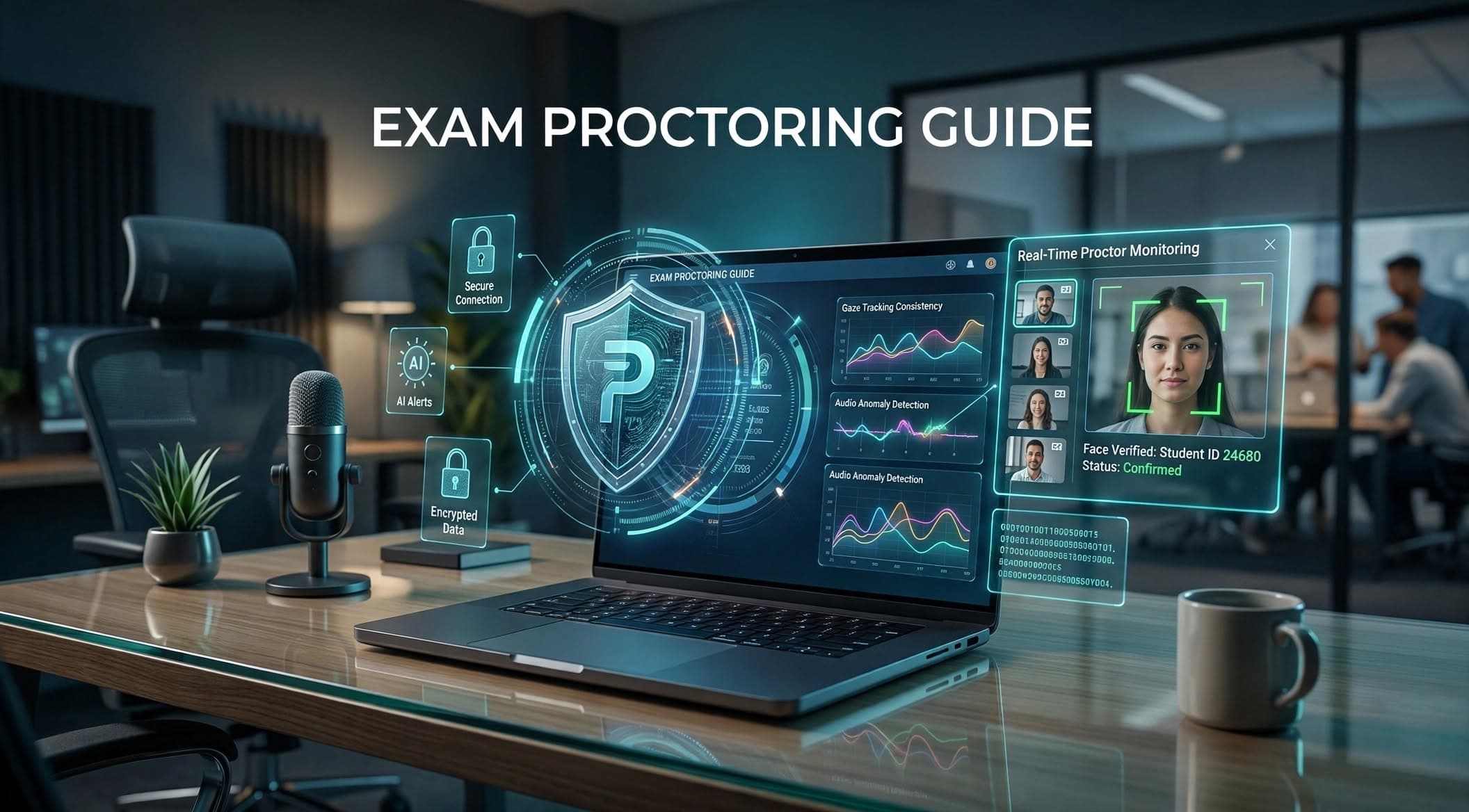
Locked Down Workstation for Exam Proctoring Guide
Learn how to design a locked down workstation for exam proctoring with the right OS controls, device policy, network hardening, and support model.
Oct 17, 2026
Read More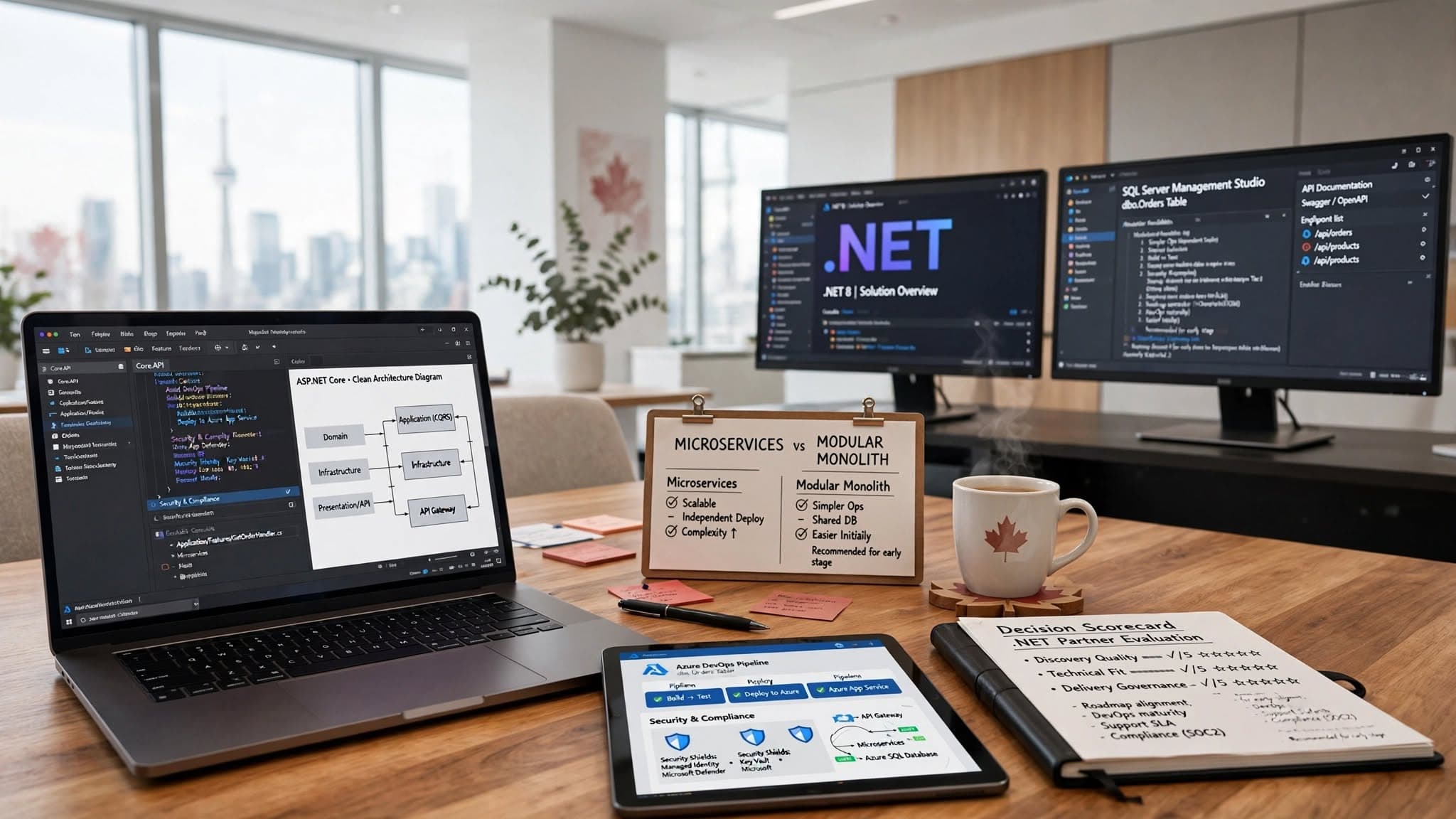
Programming
How to Choose a .NET Development Company in Canada
Learn how to evaluate a .net development company in canada for architecture, security, team fit, delivery model, costs, and long-term support.
Oct 16, 2026
Read More
Programming
Secure Remote Desktop for BPO Call Centres: Practical Guide
A practical guide to secure remote desktop for bpo call centres, covering architecture, controls, compliance, rollout steps, and realistic costs.
Oct 15, 2026
Read MoreReady to Transform Your Business?
Let's discuss how our expertise can help you achieve your goals